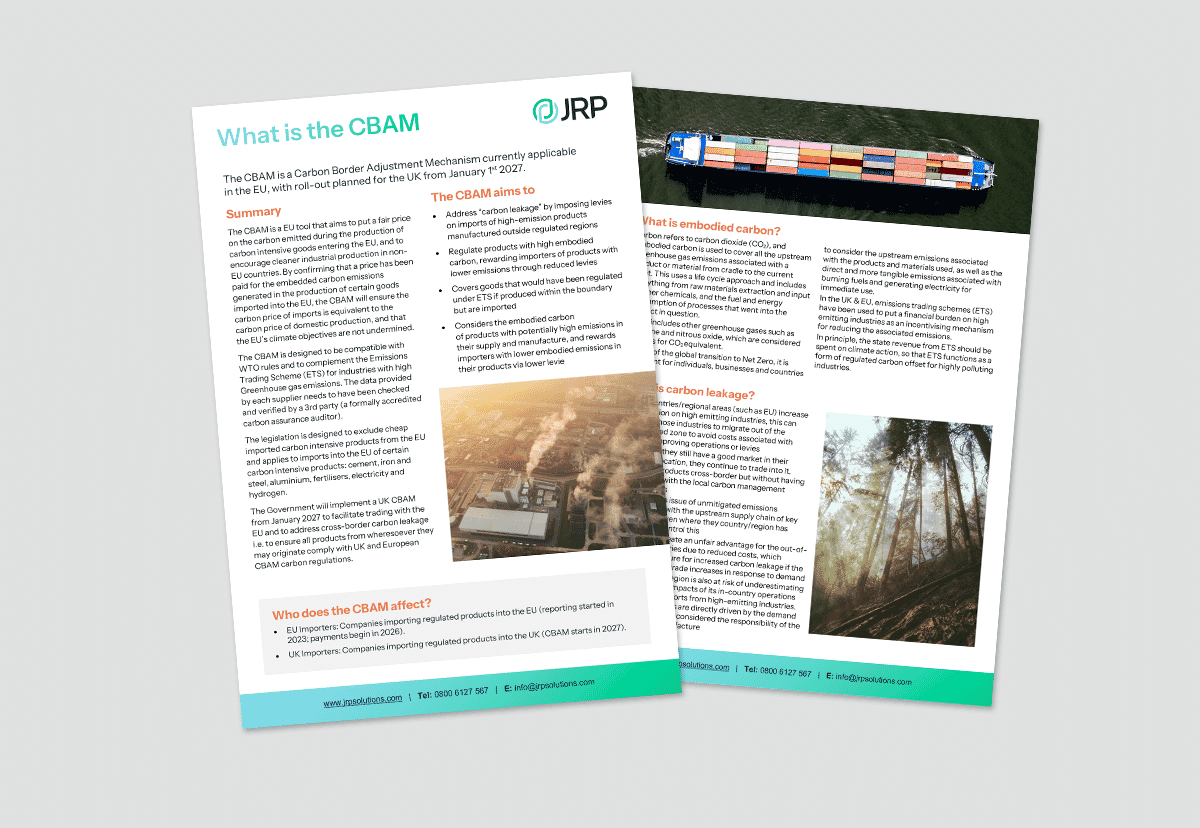
FREE FACTSHEET: Understanding the Carbon Border Adjustment Mechanism (CBAM)
This factsheet provides a clear and concise overview of CBAM – how it works, which industries it affects, and what businesses need to know.
As the world intensifies efforts to combat climate change, the European Union’s Carbon Border Adjustment Mechanism (CBAM) is a key policy designed to reduce carbon leakage and promote fair competition. CBAM places a carbon price on imported goods based on their emissions, ensuring that international producers meet the same environmental standards as those within the EU. CBAM is currently only in effect in the EU but will roll-out to the UK from January 1st, 2027.
September 2025 update
In September 2025, the EU adopted a regulation under the “Omnibus 1” package to simplify the CBAM, aiming to ease administrative burdens on SMEs and occasional importers while still covering most imported emissions. The new rule introduces a 50-tonne annual threshold for iron, steel, aluminium, fertiliser, and cement imports, below which importers are exempt, though electricity and hydrogen remain fully subject to CBAM reporting.
DOWNLOAD THE FREE FACTSHEET
Enter your details to get access to this free factsheet
We are offering free downloads of our factsheet to energy and sustainability professionals involved in any part of their organisation’s sustainability or Net Zero journey. If you would like a link to the factsheet, please request it here.
"*" indicates required fields