SERVICES | COST OF INACTION ANALYSIS
Cost of inaction analysis
One of the biggest barriers to implementing energy saving projects is securing internal approval and investment. Decision makers often focus on upfront capital costs without fully understanding the long-term financial impact of doing nothing.
Proud to have worked with:









Why the cost of inaction continues to grow
Delaying action doesn’t just mean missing immediate savings opportunities. Over time, organisations become increasingly exposed to rising operational costs, inefficient energy use, climate-related pressures, and future investment risks.

The financial impact of inaction
Without a clear understanding of these future impacts, organisations often underestimate the true financial exposure of delaying investment. The financial impact of inaction can be driven by:
-
Rising and volatile energy prices
-
Increasing operational inefficiencies over time
-
Production growth amplifying energy demand and waste
-
Climate-related impacts increasing cooling and operational requirements
-
Delayed carbon and sustainability improvements
-
Missed opportunities for reinvestment and long-term savings
-
Increasing maintenance and infrastructure pressures
What you gain from a cost of inaction analysis
- A clear financial case for energy and carbon reduction investment
- Stronger justification for capital expenditure and funding approval
- Increased confidence in prioritising improvement projects
- Evidence-based forecasting to support strategic planning
- Greater understanding of the long-term cost of delayed action
- Improved visibility of future operational and energy cost exposure
- Better understanding of climate, energy, and operational risk drivers
- Clearer insight into long-term cost escalation and avoided savings
- Improved engagement from senior stakeholders and decision makers
- Better communication of investment risk and opportunity
- Greater alignment between operational, financial, and sustainability priorities
- Support for long-term resilience and sustainability planning
How we demonstrate the cost of inaction
We carry out a detailed comparative analysis between the cost of implementing improvement projects and the financial consequences of delaying or avoiding action.
Our analysis can include:
- Assessment of identified energy-saving and improvement opportunities
- Forecasting future energy consumption and operational cost scenarios
- Modelling the impact of rising energy prices over time
- Analysis of production growth and operational changes
- Comparison of implementation costs versus cumulative savings
- Identification of long-term operational and financial exposure
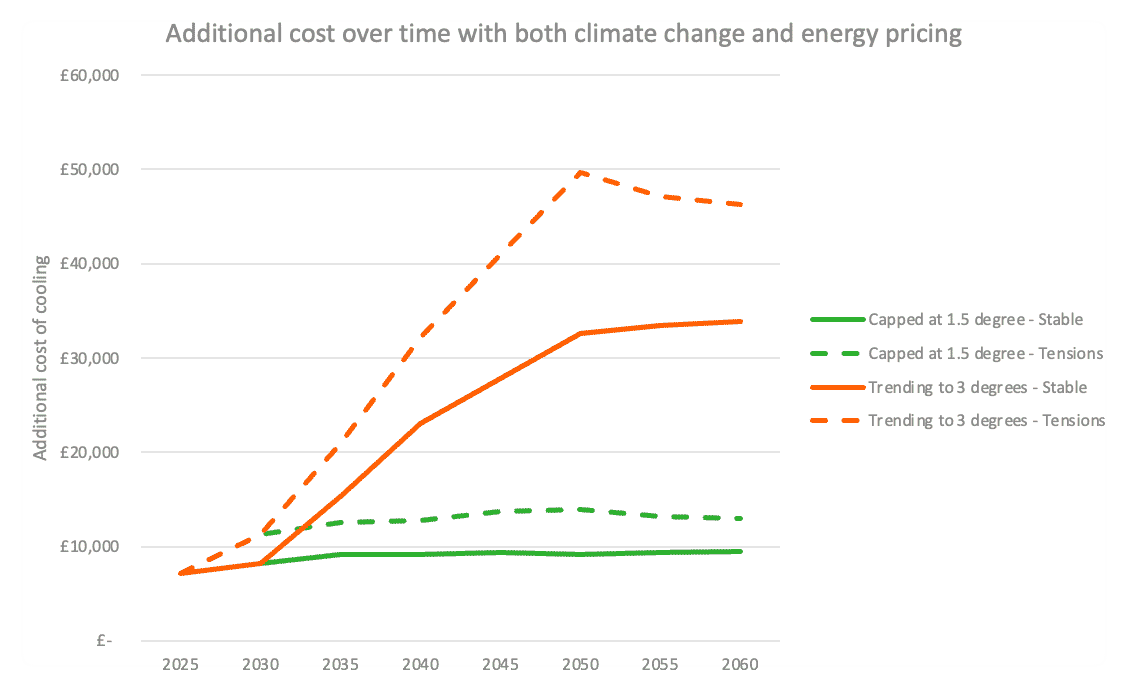
- Visualisation of future cost escalation and missed savings opportunities
- This creates a clear, evidence-based business case for investment and prioritisati
Understanding future operational cost exposure
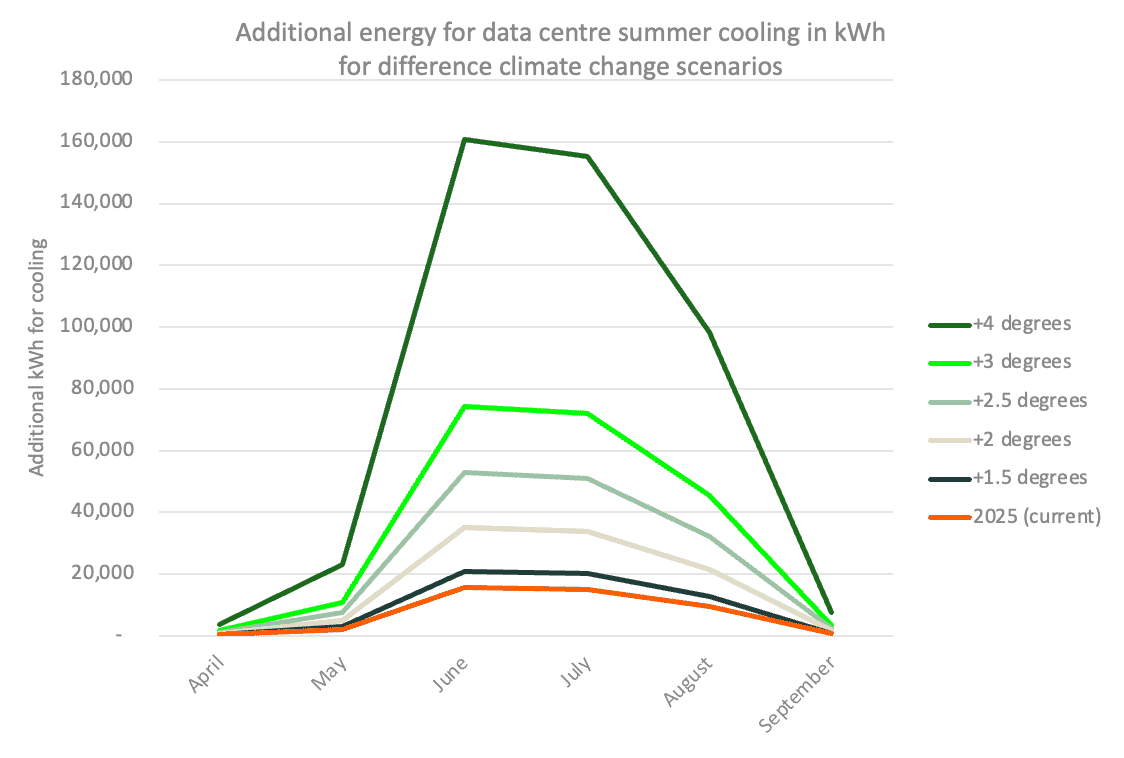
Climate and energy modelling can help organisations understand how delaying adaptation and efficiency improvements increases operational energy demand and long-term cost exposure over time.
Energy demand, operational pressures, and climate-related impacts are all expected to increase over time. Climate and energy modelling can help organisations understand how delaying adaptation and efficiency improvements may significantly increase long-term operational and energy costs.
By combining operational forecasting with future energy and climate scenarios, organisations can better understand:
- The compounding impact of rising energy prices
- How operational growth affects future energy demand
- The long-term cost of inefficient or ageing infrastructure
- The financial implications of delayed adaptation and improvement projects
- Future operational and resilience-related cost exposure
This enables organisations to move beyond short-term budgeting and make more informed long-term investment decisions.
Why choose us
We combine our 25+ years of technical energy expertise with commercial insight to deliver analysis that resonates with decision makers.
- Proven experience supporting investment decisions
- Strong understanding of energy markets and cost drivers
- Ability to translate complex data into clear, actionable insights
- Practical, results-focused approach
- Experience working with a wide range of industrial and commercial organisations

Get in touch
Are you ready to demonstrate the true cost of inaction and unlock investment in energy and carbon reduction projects?
CASE STUDIES
Our impact
See how we help organisations reduce energy costs, meet compliance requirements and build resilience to climate change.