What to do about plastic – the material we love to hate (and can’t live without)
Right now, plastics are firmly back in the spotlight. From UN negotiations on global plastic pollution, to the UK’s first summer test of new waste and recycling systems, to growing scrutiny over packaging labels, plastic is once again front-page news.
But plastics are really useful, and they solve issues that can have even greater environmental impacts. Which means going “plastic free” isn’t the straightforward solution it might seem.
On the global stage
Last week’s UN talks in Geneva aimed at tackling plastic pollution collapsed without agreement. Some countries are pushing for a hard cap on global plastic production, pointing to the pollution caused during manufacturing and growing concerns over the health and ecological impacts of plastic breakdown.
But others, especially nations that benefit economically from plastic production or oppose binding controls, are holding out. For now, the deadlock continues.
When does it stop being plastic?
Walk into a shop and you’ll find “plastic alternatives” everywhere. They often look and feel identical to the real thing.
But their sustainability story is much more complex in terms of both upstream manufacturing and downstream in waste management. It's hard to give any kind of generalised recommendations because of different use cases and the individual products and sourcing make a big difference so instead it's worth thinking about what assumptions might not be true about plastic alternatives.
Here are a few things to keep in mind:
- Upstream impacts aren’t always better. While bioplastics may avoid fossil fuels, large-scale crop production for plastics can drive deforestation, water stress, and food supply issues, similar to biofuels.
- Bioplastics are still an industrial polymer. Even if made from plant oils, they can behave exactly like conventional plastics once manufactured, including releasing microplastics.
- They confuse recycling. Many bioplastics look the same as conventional plastics but can contaminate recycling streams if not properly separated.
- “Biodegradable” doesn’t always mean benign. Some so-called solutions, like oxo-degradable plastics, just fragment into microplastics. The EU has banned these, and the UK may follow suit.
- Disposal is tricky. Most bioplastics can only be disposed of in general waste, often via incineration. Only a few break down in industrial composting facilities which requires careful management, and even then, the end product is a bulking material devoid of nutrients.
- Recyclable still wins in the waste hierarchy. If you can guarantee it will be recycled, and the upstream impacts are comparable, a recyclable item should have a lower overall emissions footprint than a non-recyclable one even if it is plastic.
The plastic in your hand
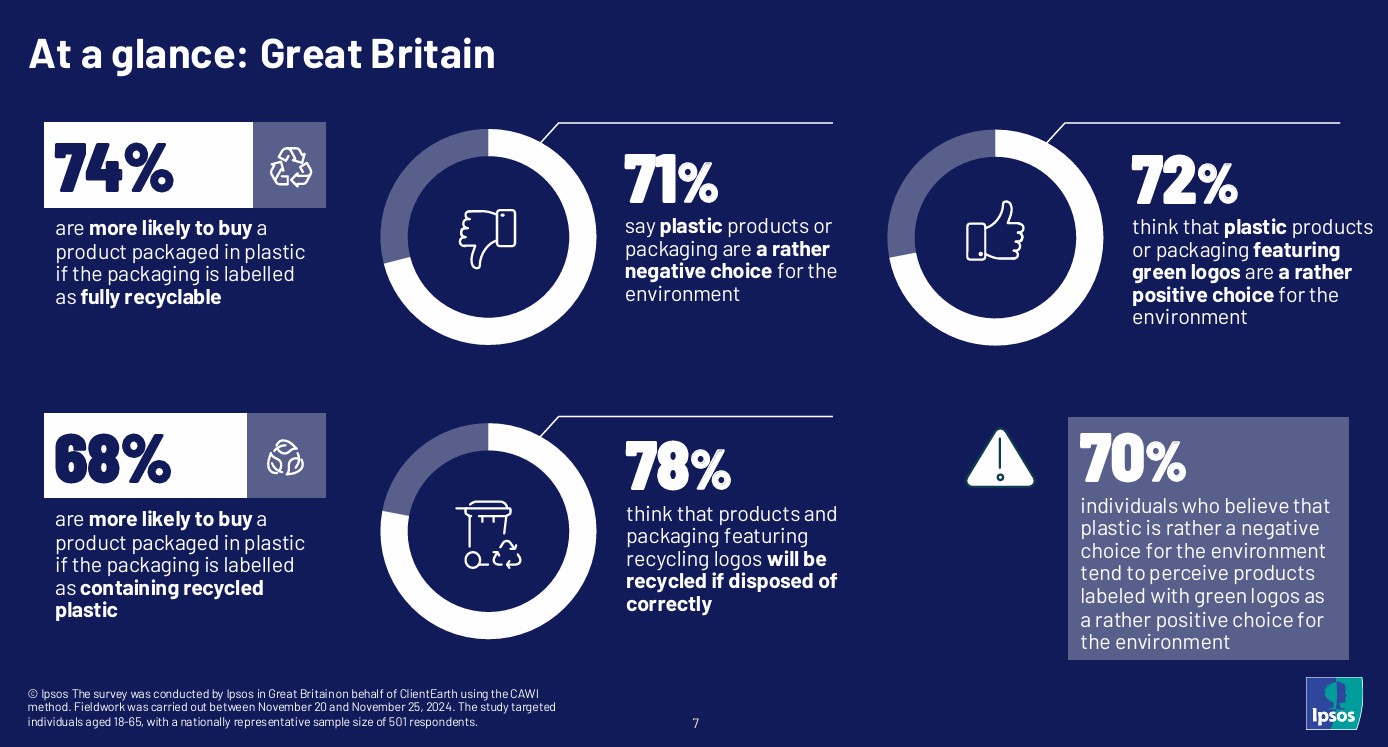
A recent survey commissioned by ClientEarth found that while most people see plastic negatively, they’re heavily swayed by “recycled materials” or “recyclable” labels on packaging.
Is this greenwashing? Maybe. But it’s also understandable. If consumers put something in the recycling bin, they expect it to actually be recycled. As a consumer, I still want to know whether packaging is technically recyclable, and that information does influence my choice compared to a non-recyclable option.
The real question isn’t whether people think plastic is “good” or “bad.” It’s how it compares to the alternatives and whether messaging is helping consumers make informed choices, or just nudging them from “bad” to “tolerable.” Whilst plastic continues to be the manufacturers' choice to deliver products, it is not reasonable to expect that consumer choice (both public and business consumers) will make the difference in how much plastic waste reaches the environment.
 The UK picture
So, how much plastic is actually being recycled in the UK?
- Official figures put 2024 plastic packaging recycling rates at 51–53% (UK statistics on waste - GOV.UK). But this includes commercial packaging, which has a much more controlled waste stream. Household recycling is messier.
- Realistically, post-consumer plastic recycling probably sits closer to 35–40%, once contamination is factored in.
- Waste collection methods could make a huge difference: kerbside sorting (where items are separated on the street) could deliver cleaner recycling than mixed bags, where a couple of contaminated bags could result in waste from half the street being rejected. Similarly, clear signage and instructions, especially for visitors to the street who could have very different recycling rules at home.
- A growing challenge: the rise of “energy from waste” (incineration with energy recovery). Burning rubbish to generate energy relies on high calorific value waste such as plastics, paper, and food waste for fuel, creating a financial incentive to keep waste streams “contaminated” rather than recycled.
Plastics and business waste
If your business uses plastics, here are some key questions to ask:
- What role do plastics play for you? Hygiene, convenience, cost?
- Where are they coming from?
- Could you reduce or reuse instead of relying on single-use?
- Are your suppliers open to change? What are the alternatives?
- If you need plastic, does it have to be fossil-derived? Would bioplastics work? And how can you manage their upstream emissions?
- How are you separating plastics in your business waste? Can you collect and separate soft plastics?
- Could you work with your waste provider to improve recycling outcomes?
- How are you communicating your plastic choices to customers?
If you want to have a chat with someone about the use of plastic at your organisation, or indeed any other energy, sustainability or Net Zero challenge, you can book a call, or email us on info@jrpsolutions.com
Useful links
Plastic Pollution Talks in Geneva End Without Treaty - Inside Climate News